essential oils are said to be effective anti-depressants
One of the amazing properties of essential oils is their ability to balance emotions.
essential oils are adaptogenic
The same essential oil can be either stimulating or calming. For example, if you are stressed, nervous or tense, diffusinglavender essential oil in the room or applying some on your neck or the bottoms of your feet will help you relax and feel calm and at peace. However, if you are tired, sore and foggy headed, essential oils can help relieve tension and uplift you.
Many natural healers believe depression is a result of being out of balance (like many other ills) and essential oils are said to balance emotions.
aromatherapy
While aromatic essential oils will not “cure” depression, they are known to stimulate both the endocrine system and limbic area of the brain, which are both key in the mechanisms of emotion. Essential oils can be relaxing and sleep provoking and be helpful to someone who may be prone to irritability, anger, restlessness and sleeping difficulties.
Our emotions and our sense of smell have very strong ties – probably more than with any other of the other four senses. A Korean study on the effect of aromatherapy on pain in patients with arthritis found that receiving a massage with lavender, marjoram, eucalyptus, rosemary, and peppermint oils significantly decreased both the pain AND depression levels.
Aromatherapy is generally effective for people who have mild forms of depression that do not require drugs. Essential oils can be especially helpful when the doctor is trying to wean a patient off drugs. I read that essential oils can be used safely in conjunction with anti-depressant medications because they will not interfere with the dosage or effect. Of course, if you are currently taking prescription drugs to deal with depression or anxiety, you shouldn’t abruptly stop taking them or replace them with essential oils without your doctor’s okay.
essential oils with antidepressant qualities...
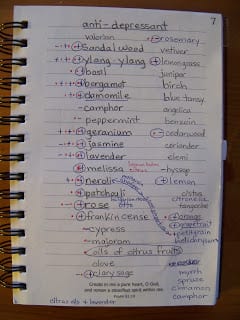
When I was researching in books and online to see which oils had anti-depressant properties, I was surprised to see how each site or book listed different oils for depression. I made a list of the different essential oils and started ticking off which oils were mentioned most.
I have 44 different essential oils listed in my recipe book that have anti-depressant properties. Often, the single essential oil or blend you find you enjoy the most will be the one that serves you best. You can experiment with different oils and discover which ones work for you.
In sixteenth and seventeenth century Europe, the herbs clary sage and lemon balm were used to counter depression and to help with paranoia, mental fatigue and nervous disorders associated with depression (though, of course, these disorders were not known by these names at that time). John Gerard in the sixteenth century said that sniffing lemon balm (also called melissa), would “gladden the heart” and that basil “taketh away sorrowfulness… and maketh a man merry and glad.” East Indians traditionally use basil in a similar fashion to prevent agitation and nightmares.
Have you looked into Basil EO? There is a comprehensive video on youtube that sounds pretty legit and is comprehensive in all the science it presents. I'm usually skeptical of doTerra propaganda, but I've had personal success with it. It also works great as a main ingredient in muscle rub that I make for it's antispasmodic properties. Check it out.
Comments are archived from the original site and closed to new replies.


1 Comment
Have you looked into Basil EO? There is a comprehensive video on youtube that sounds pretty legit and is comprehensive in all the science it presents. I'm usually skeptical of doTerra propaganda, but I've had personal success with it. It also works great as a main ingredient in muscle rub that I make for it's antispasmodic properties. Check it out.
Comments are archived from the original site and closed to new replies.